Seasonal· 4 min read ·
Spring cleanup: what to do first, and what to leave alone
Every March the first warm weekend sends people outside with rakes and bags. We understand the urge. But a spring cleanup done too early does more harm than good, and a few jobs are better left for later.
This is the order our crews follow, and the reasons behind it. It is worth reading now so you are ready when the snow goes.
Wait for the soil, not the calendar
Walk the lawn. If your shoes sink in or you leave footprints, stay off it. Walking on soggy turf compresses the soil, and you will see the footprints all summer. In most of the GTA that means waiting until the frost is out and the ground has had a week or two to dry.
Clay soil, which is common in Brampton and parts of Mississauga, stays wet longer than sandy soil, so give those yards extra time.
Clear debris with a light touch
Pick up fallen branches, winter litter and anything the plow or the wind left behind. Then rake with a flexible rake, gently, just enough to lift matted grass and leaves. You are combing the lawn, not scraping it. Hard raking pulls out the crowns of the grass plants that have just woken up.
Crew tipa lawn that looks a bit brown and flat in early spring is usually fine. Judge it again after two weeks of mowing and watering before you start repairs.
Cut back perennials and grasses, but not too soon
Cut back last year’s stems once the weather is steadily above about 10 degrees. Many native bees and other insects overwinter inside hollow stems, and they need warm days to emerge. If you cut too early you remove them with the stems.
Leave a few short stubs of 20 to 30 cm if you can, and pile the cuttings loosely at the back of the yard for a week or two before bagging them.
Look for winter damage
Check along the road and driveway edges for salt burn, and at hedges and shrubs for snapped branches. Salt-damaged grass often grows back, but it helps to flush the area with water and top it up with seed. Prune broken branches back to healthy wood. Do not prune spring-flowering shrubs such as lilacs until after they bloom.
If a hedge or small tree looks worse than a few snapped twigs, our tree and hedge care team can take a look.
Edge the beds, then mulch
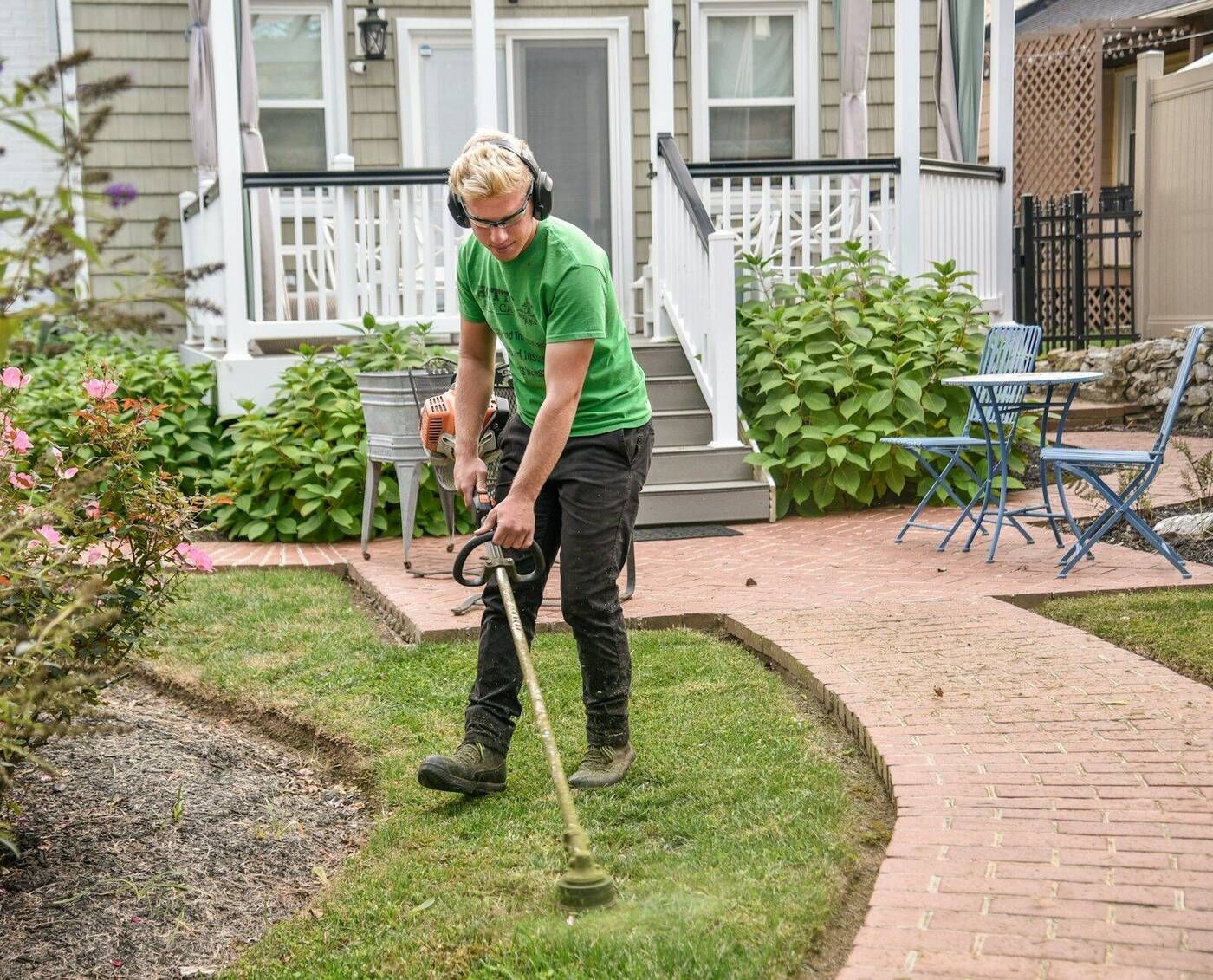
A clean edge makes a bed look finished. Cut a shallow trench along the lawn side with a flat spade or an edger, angling the soil side slightly. Weed first, then add mulch to keep new weeds down. If you are unsure how much to buy, our guide to mulch has the numbers.
“Edging and mulching make a yard look kept. Everything else is detail.”
Check drainage and downspouts
Spring is when you find out where water goes. Walk the yard after a heavy rain and look for pooling, especially near the foundation and along side yards. Make sure downspouts carry water at least 2 metres away from the house. Soggy corners usually need re-grading or a drain, and that is a job to book early.
What to leave until May
Skip the power rake, heavy fertilizing and weed-and-feed products until the lawn is actively growing. Do not plant tender annuals until the risk of frost has passed, which in much of the GTA is around the long weekend in May. Bare patches can be overseeded once the soil is above about 8 degrees.
Tools worth having
You do not need much. A flexible rake, a flat spade for edging, a wheelbarrow, a pair of sharp pruners and a stiff broom handle most of this list. Sharpen the pruners before you start, because clean cuts heal faster. If you plan to do the lawn work yourself, a mower with a mulching blade saves a lot of bagging.
A realistic schedule
Plan on two half-days for an average city lot: one for clearing and cutting back, one for edging and mulch. Spread the work over two weekends rather than rushing, and let the weather pick the days. A rainy Saturday is a good excuse to wait.
Do it yourself, or hand it over
A spring cleanup is a good weekend job for a small yard. If you have a large lot, a lot of beds, or you simply do not want to spend two Saturdays on it, our seasonal cleanup visit covers the whole list in one day. See which of our service areas we cover, then ask for a free estimate on the contact page.
Want GreenScape to take care of it?
Tell us about your property and we will arrange a free visit and a clear quote.